Two wearable Kernel Flow2 time-domain fNIRS systems — whole-head, naturalistic imaging of cortical hemodynamics, with a second unit for two-person hyperscanning and dyadic social neuroscience.
Maintained by the Chang Lab & DBIC · Consortium for Interacting Minds · SharedThe lab operates a pair of Kernel Flow2 time-domain functional near-infrared spectroscopy (TD-fNIRS) systems, housed in the Consortium for Interacting Minds (CIM). Each is a lightweight, wearable whole-head helmet with distributed source–detector modules that pulse dual-wavelength near-infrared light into the cortex and time the returning photons. Because the measurement is optical rather than magnetic, participants can move, speak, and interact freely — no scanner bore, no fixed table, and a fast, cap-free setup.
Running two units at once is the defining capability: two people can be recorded simultaneously during live interaction, opening the door to hyperscanning and dyadic study designs that are difficult or impossible inside the MRI scanner.
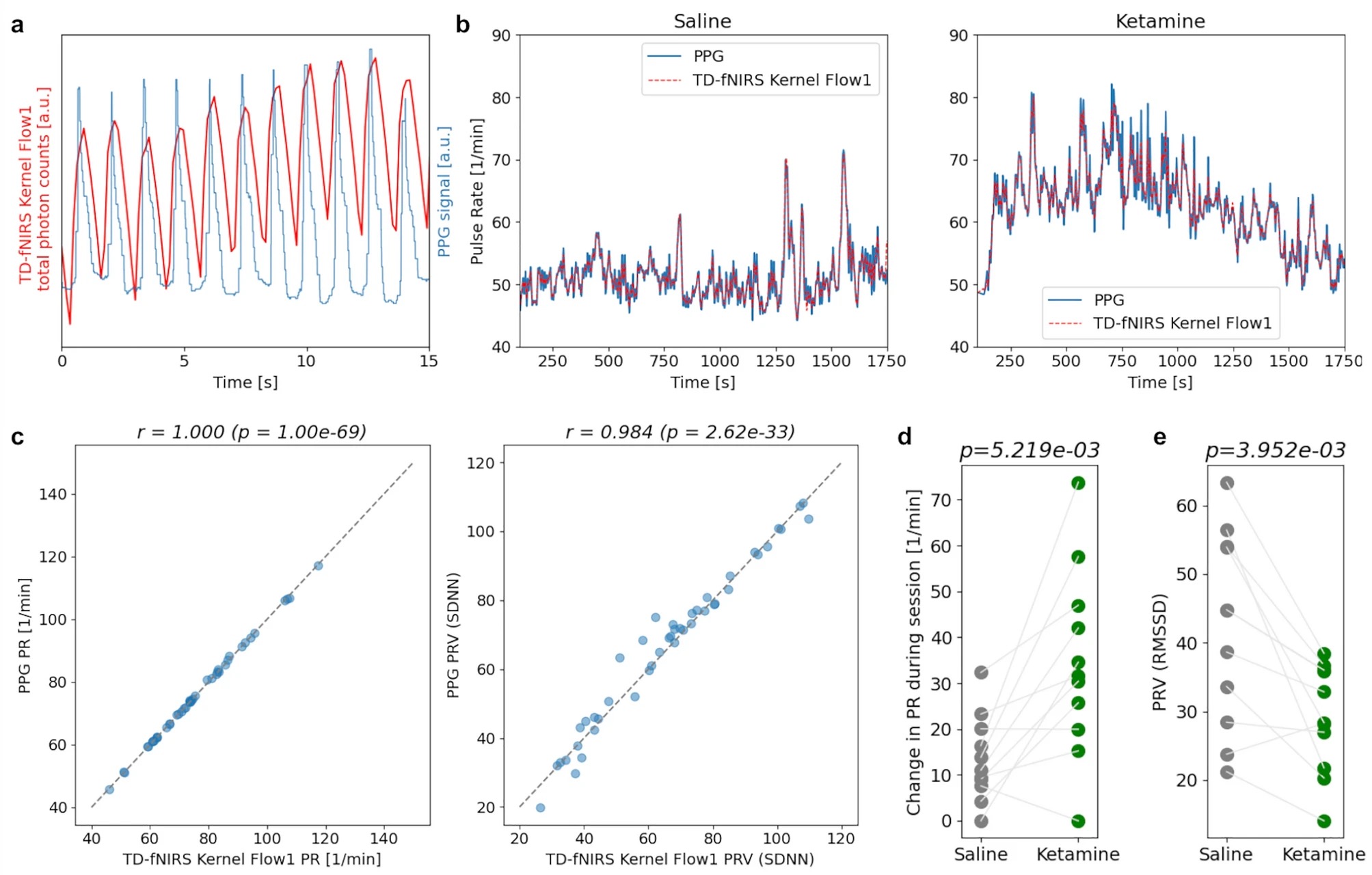
TD-fNIRS times individual photons as they scatter through tissue, adding depth sensitivity that separates deep cortical signal from surface blood flow.
Pulsed lasers and time-resolved single-photon detectors record the full time-of-flight distribution, not just light intensity — the core of the time-domain method.
Distributed source–detector modules span the helmet for broad cortical coverage. Exact module and channel counts to be confirmed.
Dual-wavelength light resolves oxy- and deoxy-hemoglobin separately, mapping the hemodynamic response across cortex.
Two synchronized systems record two brains at once during live social interaction — the basis for dyadic and hyperscanning designs.
Portable and cap-free with no scanner bore, so participants can sit, move, and converse in ecologically valid settings.
Optical hemodynamics that pair naturally with the DBIC 3T scanner — trade some spatial coverage for mobility, comfort, and free interaction.
The wearable, dual-system design makes the resource especially well suited to research questions that call for real-world interaction and movement.
The two Kernel Flow2 systems are maintained jointly by the Chang Lab (Computational Social Affective Neuroscience) and the DBIC, located in the Consortium for Interacting Minds (CIM), and are available as a shared resource. Detailed protocols and current specifications are being finalized and will also be listed on the DBIC website.